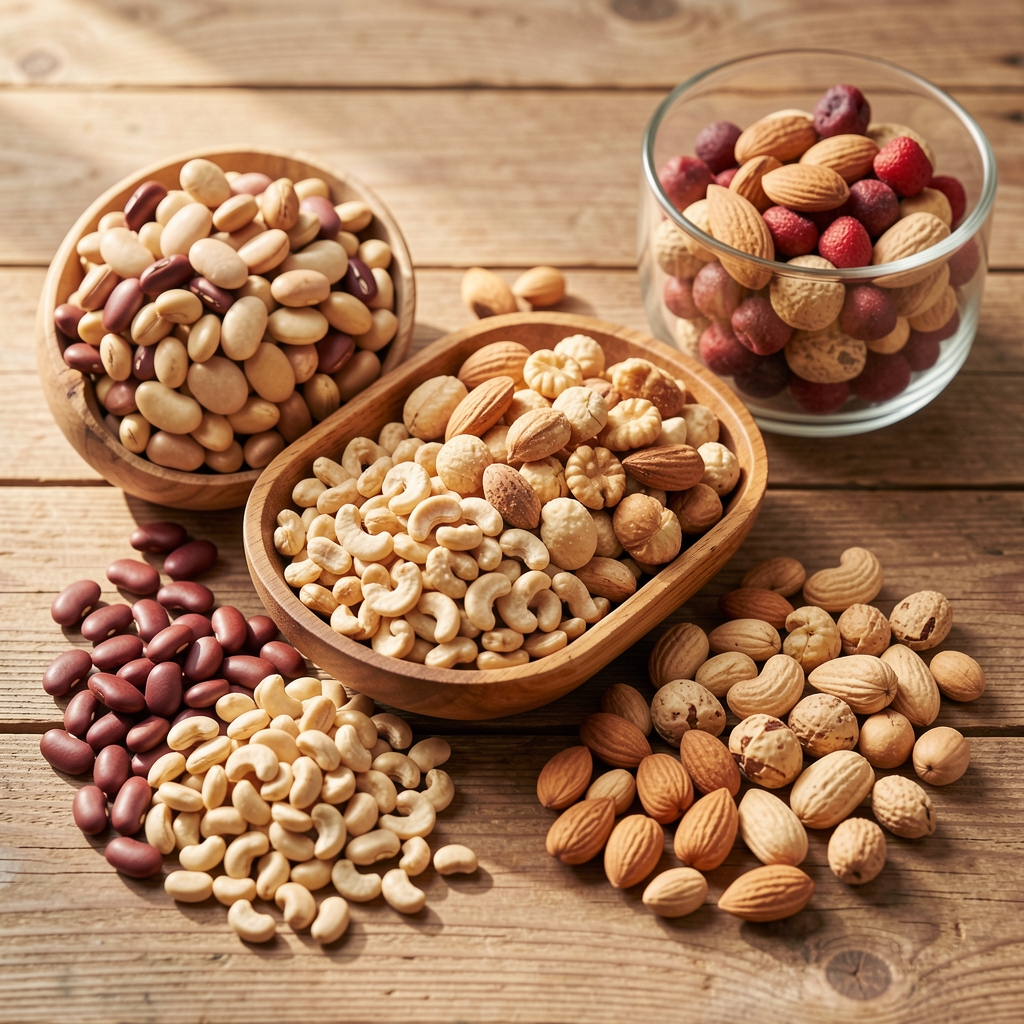
The relationship between the caloric content of food and its nutritional composition is more nuanced than standard energy-balance models suggest. When researchers examine long-term weight outcomes — those measured over twelve months or more rather than across brief intervention periods — a consistent pattern emerges: dietary approaches that prioritise nutrient density over strict caloric restriction tend to produce more stable body composition results. This article examines the documented evidence for that relationship, drawing on published nutritional research to map how calorie awareness and food quality interact across typical adult eating patterns in the United Kingdom.
What Calorie Awareness Actually Measures
Calorie awareness, as it appears in dietary research, refers to a person's practical working knowledge of the energy content of the foods they regularly consume. It is a distinct concept from calorie counting — the systematic logging of food intake against a fixed daily target. Studies assessing calorie awareness typically use recognition tasks or estimation exercises rather than diary-based records, and their findings are instructive.
Adults with higher calorie awareness tend to make different food choices at the point of selection, demonstrating an implicit preference for lower-energy-density options even when calorie tracking is not actively maintained. This behavioural pattern does not appear strongly correlated with formal nutritional education. Instead, it is associated with regular exposure to whole food preparation and a familiarity with the visual and textural properties that signal lower energy density: water content, fibre volume, and minimally processed composition.
The practical implication is significant. Calorie awareness functions more reliably as a guiding heuristic when it operates alongside familiarity with food quality, rather than as a standalone arithmetic practice. Several studies examining this interaction note that participants who combined moderate calorie awareness with consistent whole food choices maintained more stable body composition over twelve to thirty-six month follow-up periods than those who tracked calories without adjusting food quality.
"Two dietary approaches matched for caloric intake but differing substantially in nutrient density produce divergent outcomes over time — not because calories become irrelevant, but because nutrient-dense foods alter the conditions under which calories are consumed."
Nutrient Density: Defining the Term Precisely
Nutrient density describes the concentration of essential nutrients — vitamins, minerals, dietary fibre, and bioavailable protein — relative to the energy content of a food or meal. A food with high nutrient density delivers a greater quantity of these constituents per unit of energy than a food with low nutrient density at an equivalent caloric value.
In practical terms, this distinction maps closely onto the whole food versus processed food boundary, though not perfectly. Certain processed foods retain or are fortified with meaningful nutrient content. Conversely, some naturally occurring foods — refined starches, concentrated sugars in fruit juice — carry lower nutrient density despite their origin. The useful frame is not whether a food has been processed, but whether its final composition retains the fibre, micronutrient profile, and protein content associated with its unprocessed precursors.
Whole grains illustrate the distinction clearly. A whole grain retains its bran and germ fractions, which carry the majority of its dietary fibre and B vitamin content. Refined grain products retain the endosperm but lose much of the fibre and micronutrient density in the milling process. When consumed at equivalent caloric quantities, the whole grain variant produces a longer-sustained fullness response due to its fibre content and a more gradual glucose absorption profile. Over extended periods, these per-meal differences in satiety and absorption compound into measurable differences in overall intake patterns and body composition outcomes.
The Energy Balance Framework and Its Practical Limits
Energy balance — the relationship between energy consumed and energy expended — remains the foundational mechanism through which weight composition changes over time. This is not contested in the nutritional literature. What has been substantially revised, however, is the assumption that energy balance operates uniformly across food types. The composition of a diet affects not only how much energy is consumed but also the efficiency of its use, the degree to which it stimulates or suppresses hunger signalling, and the extent to which it supports lean mass over adipose tissue.
Protein provides the clearest example of this composition effect. Among the three primary macronutrients, protein carries the highest thermic effect of feeding — the energy cost of digesting and metabolising a nutrient. A diet with a higher proportion of total calories from protein therefore results in a slightly higher net energy expenditure compared to a diet matched for total calories but lower in protein. Additionally, protein exerts a stronger satiety effect than equivalent calories from carbohydrate or dietary fat, reducing the likelihood of subsequent unplanned eating occasions.
Dietary fibre operates through a different mechanism but produces a similar directional effect on energy balance outcomes. Soluble fibre slows gastric emptying and produces short-chain fatty acids during fermentation in the colon, both of which contribute to sustained fullness. Insoluble fibre increases meal bulk and reduces energy density. A diet consistently high in dietary fibre — achieved primarily through whole grains, legumes, vegetables, and fruit — therefore tends to produce lower net caloric intake at a given level of dietary satisfaction compared to a lower-fibre diet matched for total food volume.
Practical Interactions: What the Data Shows
Several large cohort studies following adult populations over multi-year periods provide useful data on the practical interaction between food quality and body composition stability. Among the consistent findings across these datasets:
- Adults who reported a higher proportion of unprocessed or minimally processed foods in their dietary pattern maintained more stable body weight across five-year follow-up periods, independent of total reported caloric intake at baseline.
- The displacement of ultra-processed food products with whole food alternatives — without explicit calorie reduction targets — was associated with modest but sustained reductions in body fat percentage in randomised controlled feeding trials.
- Dietary patterns characterised by high whole grain intake were consistently associated with lower BMI trajectories across adult age groups in UK and European cohort data, an association that held after statistical adjustment for total carbohydrate intake.
- Higher dietary fibre intake was one of the most robust predictors of sustained weight composition maintenance in adults who had previously achieved weight reduction through any dietary approach.
These findings do not constitute evidence that food quality overrides energy balance. They indicate that the practical functioning of energy balance across real-world eating conditions — with its inherent variability in hunger signalling, eating occasion frequency, and meal-to-meal intake consistency — is meaningfully modulated by the nutritional composition of the diet.
Applying Calorie Awareness Within a Nutrient-Dense Framework
The editorial position of Tekorina Review, consistent with the published evidence base, is that calorie awareness and food quality function most effectively as complementary orientations rather than competing approaches. Calorie awareness without attention to nutrient density tends to produce short-cycle dietary changes that are difficult to sustain. Nutrient-dense food choices without any energy-balance awareness can, in some dietary patterns, lead to inadvertent caloric excess — particularly where high-calorie whole foods such as nuts, olive oil, and whole-grain products are consumed without portion perspective.
The integrated approach that the evidence most consistently supports is one in which a broadly nutrient-dense dietary pattern — anchored by whole grains, legumes, vegetables, lean protein sources, and whole fruit — provides the structural foundation, and in which calorie awareness operates as a general orientation rather than a daily arithmetic practice. This combination allows the satiety-promoting properties of nutrient-dense whole foods to moderate intake naturally while the individual retains a working understanding of the energy landscape of their routine food choices.
For most adults with no specific dietary requirements, this approach produces a more durable eating rhythm than either strict caloric restriction without food quality consideration or wholesale dietary category elimination. The weight of the published evidence points consistently in this direction, even as the specific optimal macronutrient ratios and meal structures remain subjects of active nutritional research.
Key Points from This Article
- — Calorie awareness functions more reliably when combined with consistent whole food choices than when applied to processed foods alone.
- — Nutrient density describes the concentration of essential nutrients relative to energy content — a different dimension from total caloric value.
- — Whole grains, legumes, and high-fibre vegetables produce more sustained satiety per calorie than lower-fibre, higher-energy-density alternatives.
- — Long-term weight composition stability is more consistently associated with dietary pattern quality than with precise short-term calorie management.
- — The energy balance mechanism remains foundational, but its practical outcomes are substantially modulated by food composition.